Better sleep that same night
The most commented-on effect. It isn't a sleeping pill, but many clients describe falling asleep sooner and waking less that night.

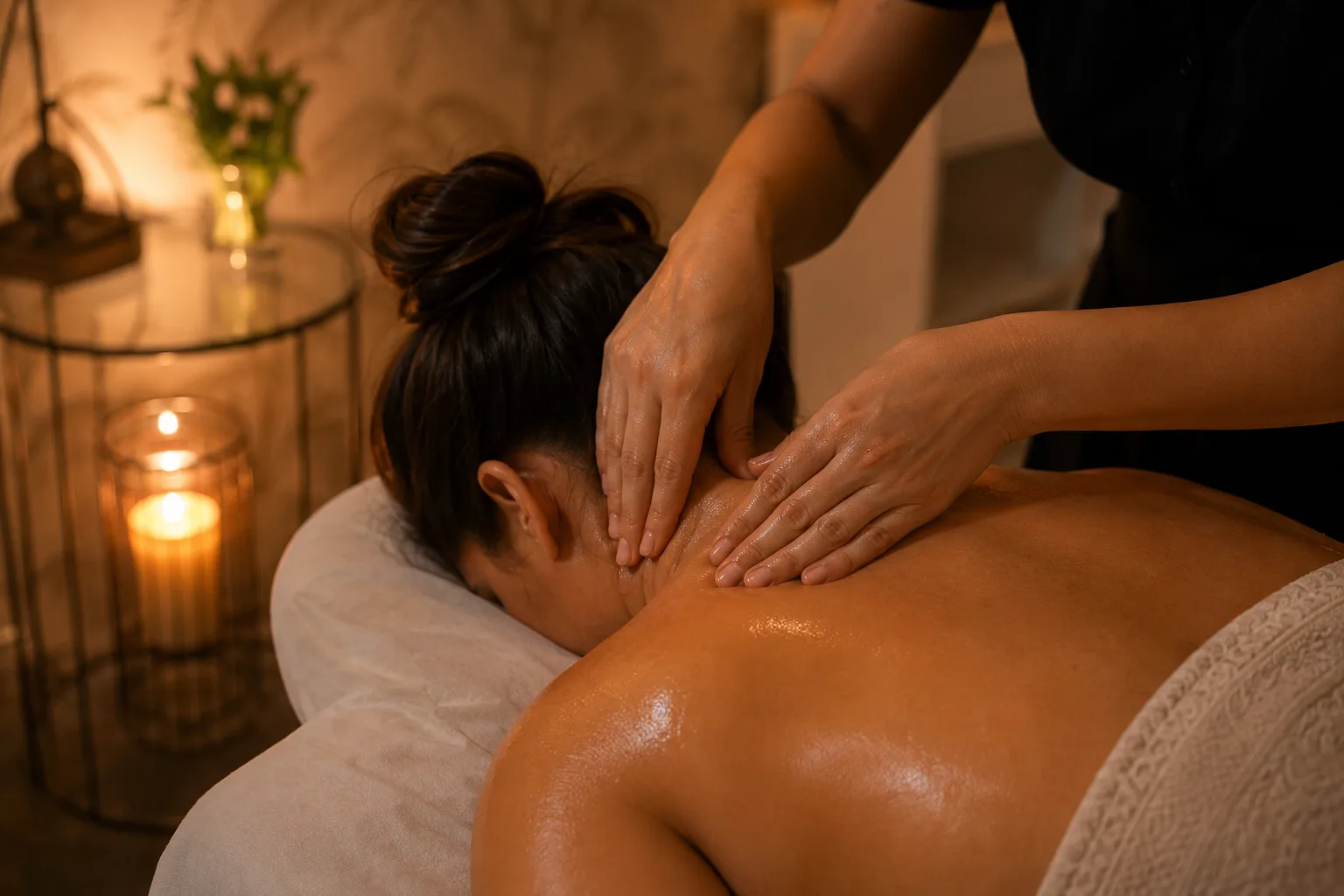
This one isn't about releasing muscle: it's about switching off the alarm. Very slow, continuous pressure synchronised with your breathing, designed to stand down the nervous system's alert state. It's what people book after weeks of sleeping badly.
The speed of the massage is what decides whether the body switches on or off.
The autonomic nervous system has two modes: sympathetic, the alert state, and parasympathetic, the rest-and-repair state. Sustained stress leaves the first one permanently on, and that's where insomnia, a clenched jaw and the feeling of not being able to stop come from.
Neurosedative work operates on that lever. Slow, predictable pressure held over one area for long enough is one of the signals the body reads as safety. Relaxation isn't forced: the body is simply given no more reasons to stay on guard.
The most commented-on effect. It isn't a sleeping pill, but many clients describe falling asleep sooner and waking less that night.
That sense of being revved up inside even while sitting still. Slow work dismantles it without you having to do anything.
Work on the skull, jaw and neck decompresses the area where tension-driven headaches originate.
The strokes synchronise with your breathing rhythm. By the end, breathing deeply stops taking effort.
This massage is not a medical or psychological treatment. If insomnia or anxiety are persistent, please speak to a healthcare professional: this helps, but it doesn't treat the cause.
Price per person. Individual session in a private room.
Kohorelax is a pleasant, balanced full-body relaxing massage. The Neurosedative targets the nervous system specifically: slower, more sustained pressure and a lot of work on head and neck. If your problem is sleep or anxiety, this is the one.
Very often, and that's fine — it's a good sign. The therapist simply continues the session; there's no need to stay awake out of politeness.
It helps, but let's be honest: it doesn't treat the cause. If your insomnia comes from stress or accumulated tension, you'll notice improvement that night and for a few days. If it's persistent or medical in origin, this accompanies but you need a healthcare professional.
For a passing stretch of bad sleep, one session usually breaks the cycle. If the stress is ongoing, one session every two weeks holds the effect better than an occasional one-off.
Time matters more here than in other treatments: the nervous system needs a while to come down. We recommend 60 minutes (€80) as a minimum, and 90 (€110) if you arrive very wound up. 30 minutes falls short for this goal.
You can, but you probably won't feel like it. You'll leave with a low pulse and a pleasantly foggy head. If possible, book late in the day and go home.