Muscle release without heavy pressure
Heat opens the fibre where other treatments need to press. Ideal if you want a therapeutic result but find intense pressure unpleasant.
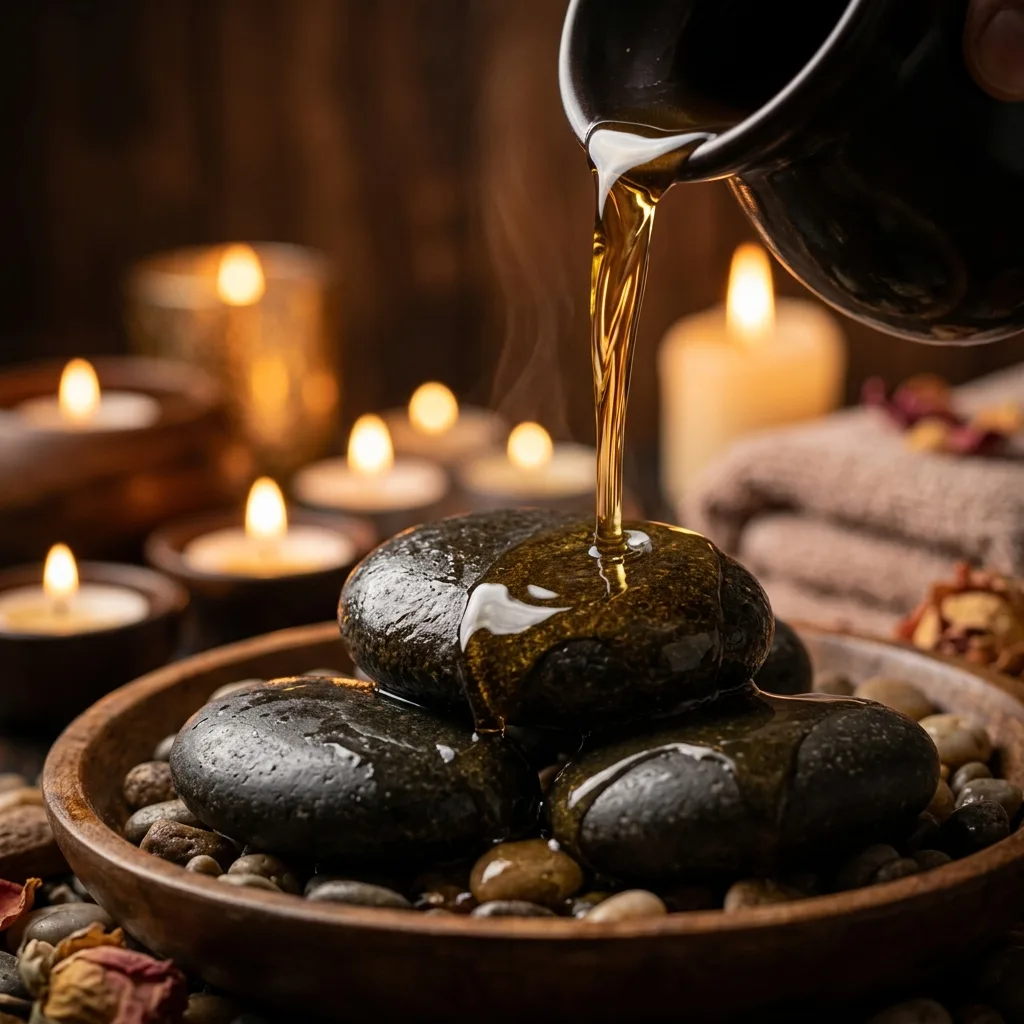
Polished, heated basalt stones are placed on key points of the body and glided with oil. The heat does the work that pressure does in other treatments: stiff fibre gives way on its own. It's the option for anyone who needs muscle release but can't tolerate being pressed.
Basalt is volcanic rock: it holds heat far longer than any other stone.
The therapeutic use of hot stones is documented in China more than two thousand years ago, and in Native American and Hawaiian traditions. The modern spa version practised today was formalised in the United States in the 1990s.
Choosing basalt isn't an aesthetic decision. It's a volcanic rock, dense and iron-rich, able to hold its temperature across a whole session. The heat penetrates around three centimetres into the tissue — enough to reach muscle that would otherwise require intense pressure.
Heat opens the fibre where other treatments need to press. Ideal if you want a therapeutic result but find intense pressure unpleasant.
The most booked treatment in winter. That seized-up feeling from the cold disappears during the session and stays away for hours.
Heat dilates surface vessels, increasing blood flow to the area and helping tissue recover.
Sustained warmth lowers the alert state much like a hot bath, but with muscular work added.
Heat is contraindicated in several circulatory conditions and where thermal sensitivity is reduced, because you wouldn't feel excessive temperature. If any of these apply, tell us when booking.
Price per person. Individual session in a private room.
No. They're heated in temperature-controlled water and the therapist always tests them on her own forearm before placing them. If at any moment it feels too hot, say so: the stone is removed immediately. Never endure it out of politeness.
It's a full massage. Some stones are placed statically on specific points, but for most of the session the therapist works by gliding the stones with oil, and with her hands too. The stones replace the pressure, not the massage.
Yes, and it's a good option if the knot is long-standing or if the deep tension release feels too intense for you. Heat prepares the tissue and allows work on areas that would be very guarded when cold. For one very localised knot, tension release is still more direct.
60 minutes (€80) as a minimum: stones need time for the heat to penetrate, and 30 minutes barely warms the area. 90 minutes (€110) is the most complete option.
The heat is local, not ambient: it concentrates where the stone rests. Most people describe it as very pleasant, even in summer. If you tend to overheat, say so and we adjust the pace and number of stones.
Check with us first. Heat causes vasodilation and can affect blood pressure. If it's controlled with medication and your doctor sees no issue, there's usually no problem, but we prefer to know beforehand.