Relief from migraines and cranial tension
Work on the points across neck, shoulders and skull is particularly effective for tension-driven headaches.
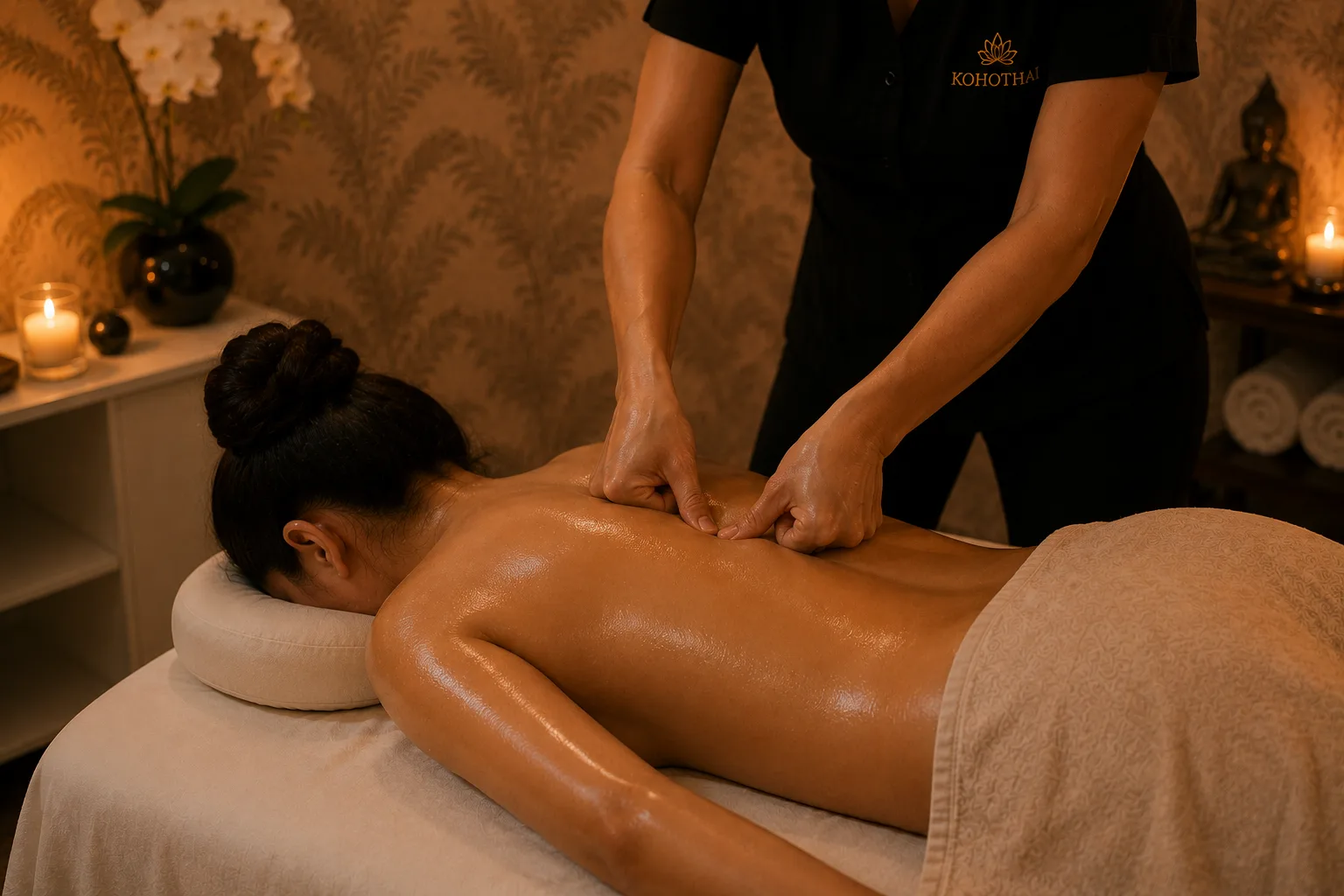
Shiatsu literally means "finger pressure". Without oil and in comfortable clothes, the therapist applies perpendicular, sustained pressure with thumbs and palms along the meridians. It's unhurried, highly precise, and one of the few treatments that leaves you feeling centred rather than drowsy.
The pressure doesn't glide: it rests, holds and lifts.
Shiatsu was formalised in Japan in the early twentieth century, drawing on traditional anma and the meridian theory of Chinese medicine. Since 1955 it has been officially recognised as a therapy by the Japanese Ministry of Health.
Its technical difference is clear: there's no gliding here. The therapist rests a thumb or palm on a point, holds the pressure for a few seconds using body weight rather than muscular force, then moves on. That unhurried, repeated rhythm is what produces the effect.
Work on the points across neck, shoulders and skull is particularly effective for tension-driven headaches.
The meridians crossing the abdomen and lower back relate to digestive function. Many people notice relief from bloating.
You gain mobility with no cracking or abrupt manipulation, which makes it suitable for anyone wary of those methods.
It doesn't make you drowsy: it leaves you clear and present. This is the one to choose if you need to perform afterwards.
Shiatsu is a wellness technique, not a medical treatment. The concepts of meridians and energy belong to the framework of traditional Chinese medicine and are not scientifically validated; what is verifiable is its effect on muscular tension and relaxation.
Price per person. Individual session in a private room.
No. Shiatsu is done clothed, in comfortable cotton clothes we provide on arrival, or you can come in loose sportswear. No oil is used, so you leave exactly as you arrived.
Both are done clothed and without oil, and that's where the similarity ends. Thai is built on broad stretching and is highly dynamic. Shiatsu is static: sustained point pressure, no stretching or mobilising. Thai activates; Shiatsu centres.
It's firm but not sharp, because the therapist uses body weight rather than force. On loaded points it can feel intense for a few seconds. If anything is more than uncomfortable, say so and it's adjusted.
Many clients report so, especially for bloating. Said honestly: the meridian framework isn't scientifically validated, and the effect likely comes from abdominal relaxation and a lowered stress state, both of which do influence digestion.
60 minutes (€80) covers the main meridians. 30 minutes (€50) works to focus on neck, shoulders and head if you're coming for migraines. 90 minutes (€110) for full work.
Yes, and it's one of its advantages. Unlike oil massages, it leaves no drowsiness and no need to shower. Many people book it in their lunch break.