Better circulation and oxygenation
Strokes directed toward the heart support venous and lymphatic return, which shows as lighter legs and better recovery.

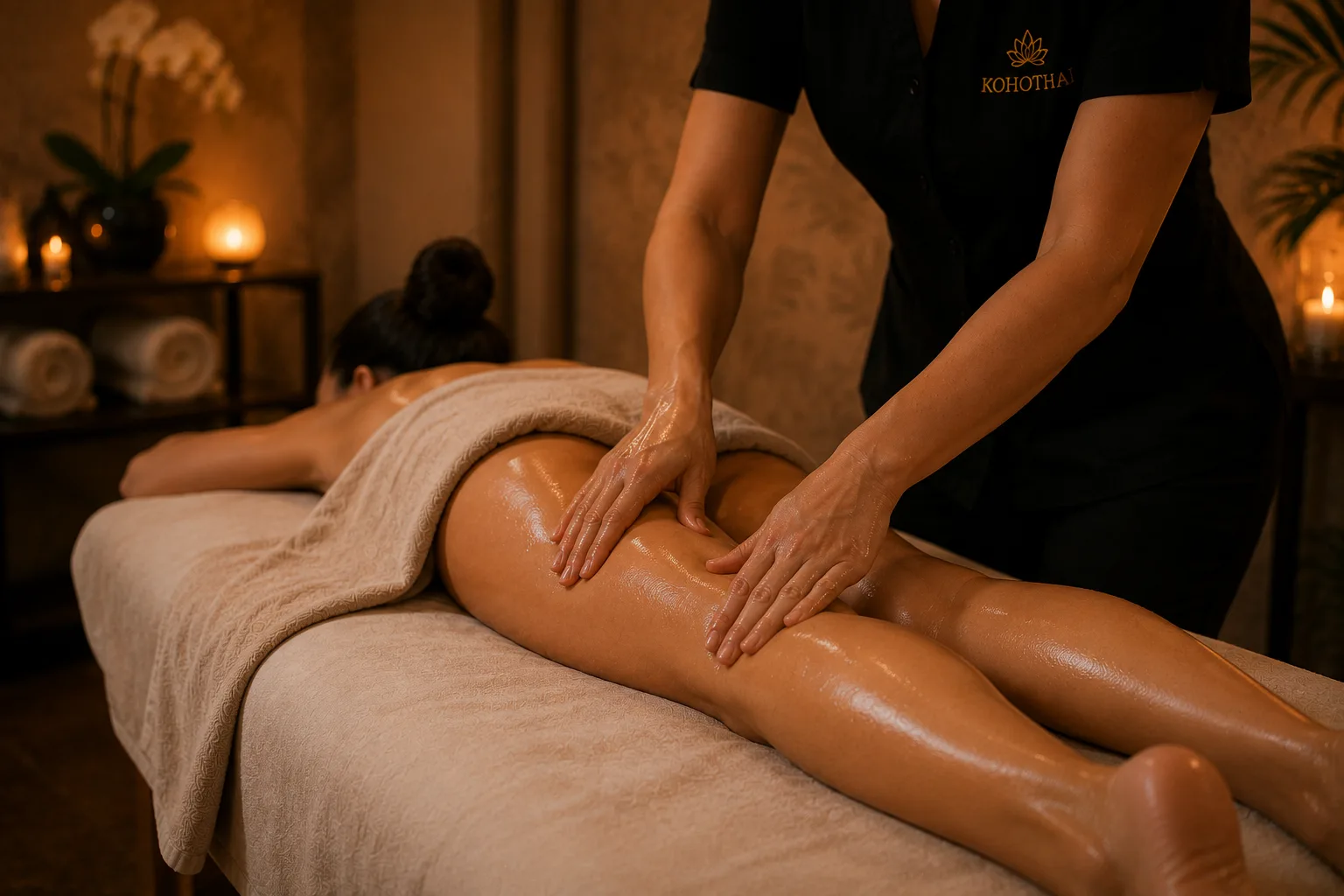
The massage almost everyone pictures when they say "a massage". Five foundational strokes — effleurage, petrissage, friction, tapotement and vibration — that boost circulation and tone muscle. No exoticism and no surprises: that's exactly why it works.
Almost every Western massage you know descends from this one.
It was developed by the Swede Per Henrik Ling in the early nineteenth century, and his contribution was systematisation: instead of a practice handed down by custom, he defined five specific strokes with identified physiological functions. It became the origin of modern physiotherapy.
That systematisation explains why it remains the most widespread in the world. Each stroke has a purpose: effleurage warms and supports venous return, petrissage mobilises fibre, friction works adhesions, tapotement stimulates and vibration relaxes. A massage with no mystery and clear logic.
Strokes directed toward the heart support venous and lymphatic return, which shows as lighter legs and better recovery.
For everyday general tension it's more than enough. You don't need an intense massage if what you have isn't a knot.
Petrissage mobilises fibre and keeps muscle elastic, particularly useful if you lead a sedentary life.
The most versatile treatment on our menu: it can be gentle, medium or firm as you ask, without changing technique.
This is the most versatile and safest treatment on our menu. If you don't know which to choose and have no specific complaint, this or Kohorelax are the sensible options.
Price per person. Individual session in a private room.
It can be both, and that's its strength. With gentle pressure it works as relaxation; with firm pressure it addresses stiffness and circulation. Say so at the start and the therapist adjusts. It's the most adaptable treatment we offer.
Kohorelax aims at switching off: enveloping strokes, steady rhythm, always gentle pressure. Swedish is more technical and varied, includes tapotement and friction, and takes higher pressure. Want to fall asleep? Kohorelax. Want muscle worked too? Swedish.
No, and it can be left out entirely. Some people find it invigorating and others find it irritating. Say so at the start and we work without it.
For general tension and mild stiffness, yes. For a settled knot with a pinpointed spot, deep tension release is more direct and effective. Swedish works the whole, not the point.
60 minutes (€80) for full body, the most common choice. 30 minutes (€50) if you only want back and neck. 90 minutes (€110) for detailed unhurried work.
One of the best, precisely because it's adaptable: whoever receives it can ask for the pressure they prefer. We have gift vouchers with instant digital delivery or in a physical box.